A website with a lot of content has a different problem from a brochure site. Pages are added by many people. News, events, courses, properties, menus or locations change weekly. In Dubai, two languages have to stay in step. Without a content management system designed for that, the site drifts: inconsistent pages, broken layouts, a developer on speed dial for every change.
We build CMS websites where the structure does the work. Every kind of content has its own type with the right fields, so an editor fills in a form and the page comes out designed. Roles decide who can publish. Translations are linked to their originals. The design stays intact no matter who added the page or when.
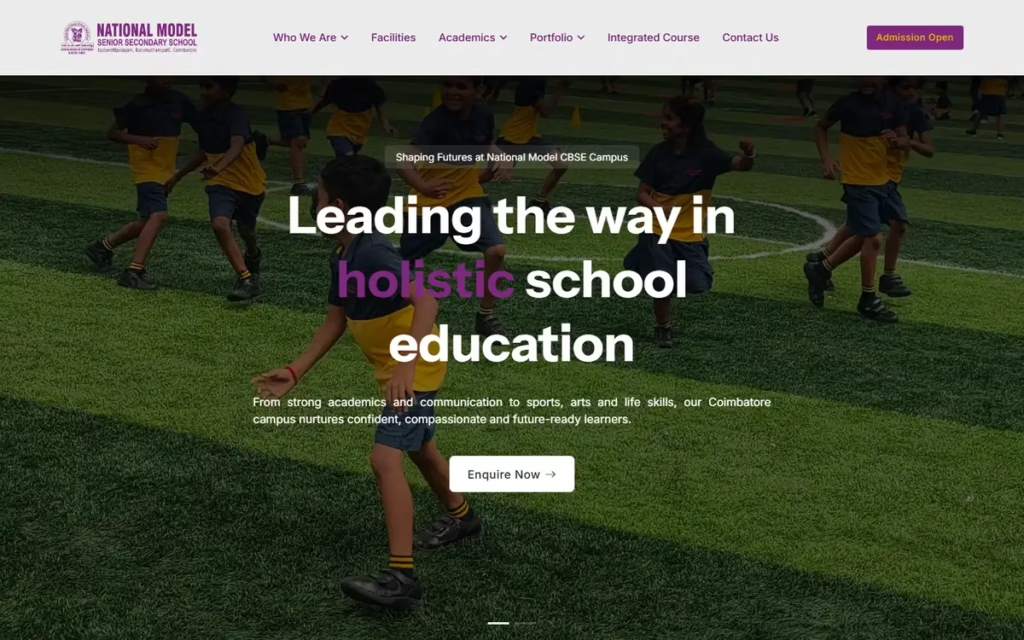
WordPress is our first recommendation for most organisations, because it is the system most editors already know and our founder has worked in it since 2016. Where a site needs to feed apps, screens or several front ends from one source, we build a headless CMS instead. Schools, clinics, real estate firms and tour operators across Dubai and India run on sites we have built this way.
What is included
- A CMS recommendation with reasons, based on how your team publishes rather than on what we feel like building
- Content modelling: every kind of content as a proper type with fields, relationships and validation
- Editor roles and approval workflows so the right people publish and the rest draft
- Bilingual publishing in Arabic and English with translations linked and right to left layouts tested
- Reusable blocks and patterns so new pages inherit the design without a developer
- Media handling that resizes, compresses and converts images automatically
- Search engine foundations built in: clean URLs, structured data, sitemaps, redirects managed from the dashboard
- Migration of your existing content, cleaned and restructured rather than copied as is
- Training for editors, written guides and a month of support after launch
How it works
1. Discover
We sit with the people who will publish. What they add, how often, who approves it, what goes wrong today. We audit your existing content and decide what to keep, merge or drop.
2. Plan
Content model, sitemap, roles and a fixed scope with price and timeline. The platform choice is made here, with the reasons written down.
3. Design
Templates for every content type, designed at phone width first and reviewed on a real device. We design the editing experience too, so the dashboard makes sense to a new editor.
4. Build
Content types, blocks, workflows and integrations built to coding standards and tested from 320 pixels wide. Your editors start adding real content on staging before launch, which is the best test there is.
5. Launch and grow
Redirects from every old URL, sitemap submitted, editors trained. Then care, hosting and content support from the same team if you want it.
Which CMS do you recommend?
WordPress for most organisations in the UAE, because editors know it, it handles bilingual content well and it is easy to find people to maintain it. A headless CMS such as Strapi or Sanity when the same content has to feed a website, an app and other channels. We write the recommendation down with reasons.
Can our team really manage it without a developer?
Yes, if the content model is right. Editors add pages from blocks and fill in fields. Design changes and new content types still need a developer, and that is where our maintenance plan comes in.
Do you handle Arabic and English?
Yes. We build bilingual sites with translations linked to their originals, so an editor can see what is missing in each language, and we test the right to left layout on real devices.
Can you migrate our existing content?
Yes. We export it, clean it, map it to the new structure and import it, then redirect every old URL so you keep your search rankings. Large archives are migrated in batches and checked by your editors.
Who does the work?
Our Dubai team runs discovery, content planning and the project, and is your single point of contact. Build is shared with our team in India, who engineer much of what we deliver.
How long does a CMS website take?
A brochure sized site launches four to six weeks after sign off. Sites with many content types, two languages or a large migration take longer, and the timeline is fixed in the plan before design begins.